Tavern and inn maps, every floor, ready for the table
The party walks into an inn and you need the room right now. Mapsmith draws the whole building from a seed: the common room, the kitchen, the store room and the snug on the ground floor, guest rooms upstairs with who is staying in each, and a cellar under it all. Every room is numbered, furnished and has a line on what’s in it.
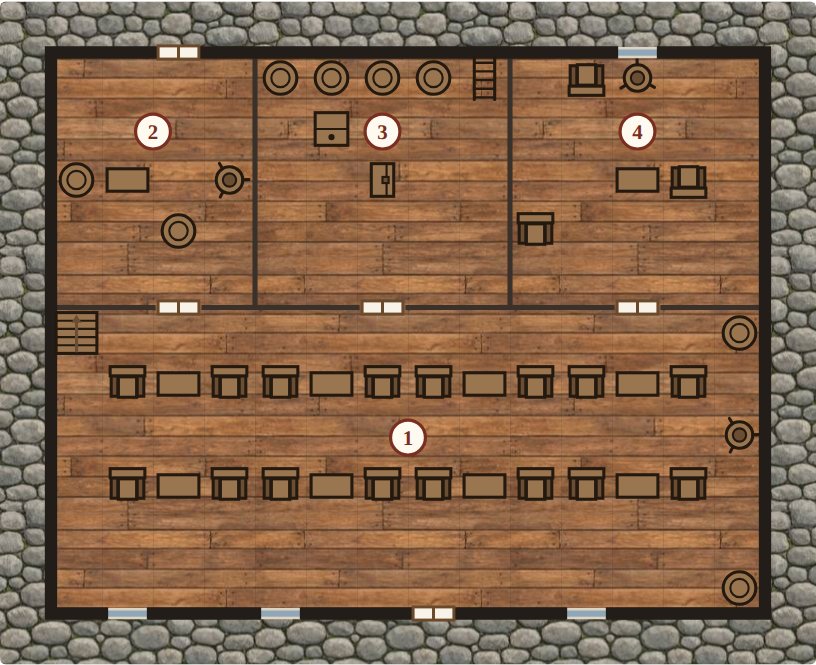
The Hungry Anchor, ground floor. The same seed always draws the same inn.
What one inn comes with
This is the one the button above opens, as Mapsmith wrote it:
- About the place: “The beer is thin and the beds are clean, which is the right way round for an inn. It is kept by Cass Crane.”
- A hook: “A guest left in the night without paying and without their luggage, and the luggage is ticking.”
- Ground floor: common room, kitchen, store room with a trapdoor to the cellar, and a snug with a bolt on the inside of the door.
- Upstairs: seven rooms off a landing. Room 7 is taken by Gisla Dunning, a pedlar with a pack bigger than they are. Room 10 is taken by Brannagh Blackwater, a scholar with a box of books and no money. The keeper sleeps in room 9.
- The cellar: casks, a wine cellar with a few bottles worth more than the house, and an old cellar that is colder than it should be.
- Two things hidden: letters tied with a ribbon in the store room, and a ledger in the old cellar that does not match the one out front.
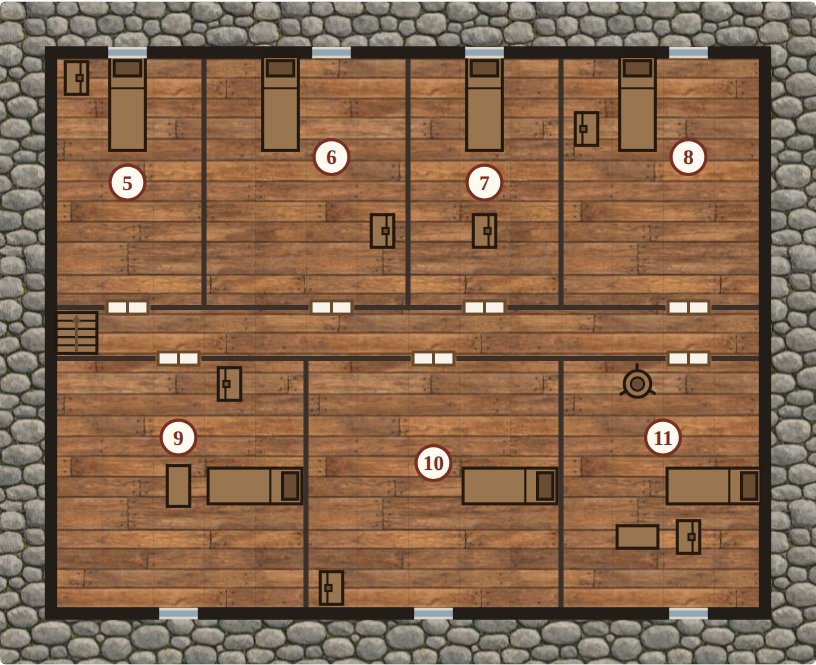
Upstairs: rooms 5 to 11. Click a number on the live map to see who is in it.
Into your virtual tabletop
Mapsmith Pro saves the floor you are looking at as a Universal VTT file (.dd2vtt): the players’ map with no numbers, plus every wall, door, window and light already placed.
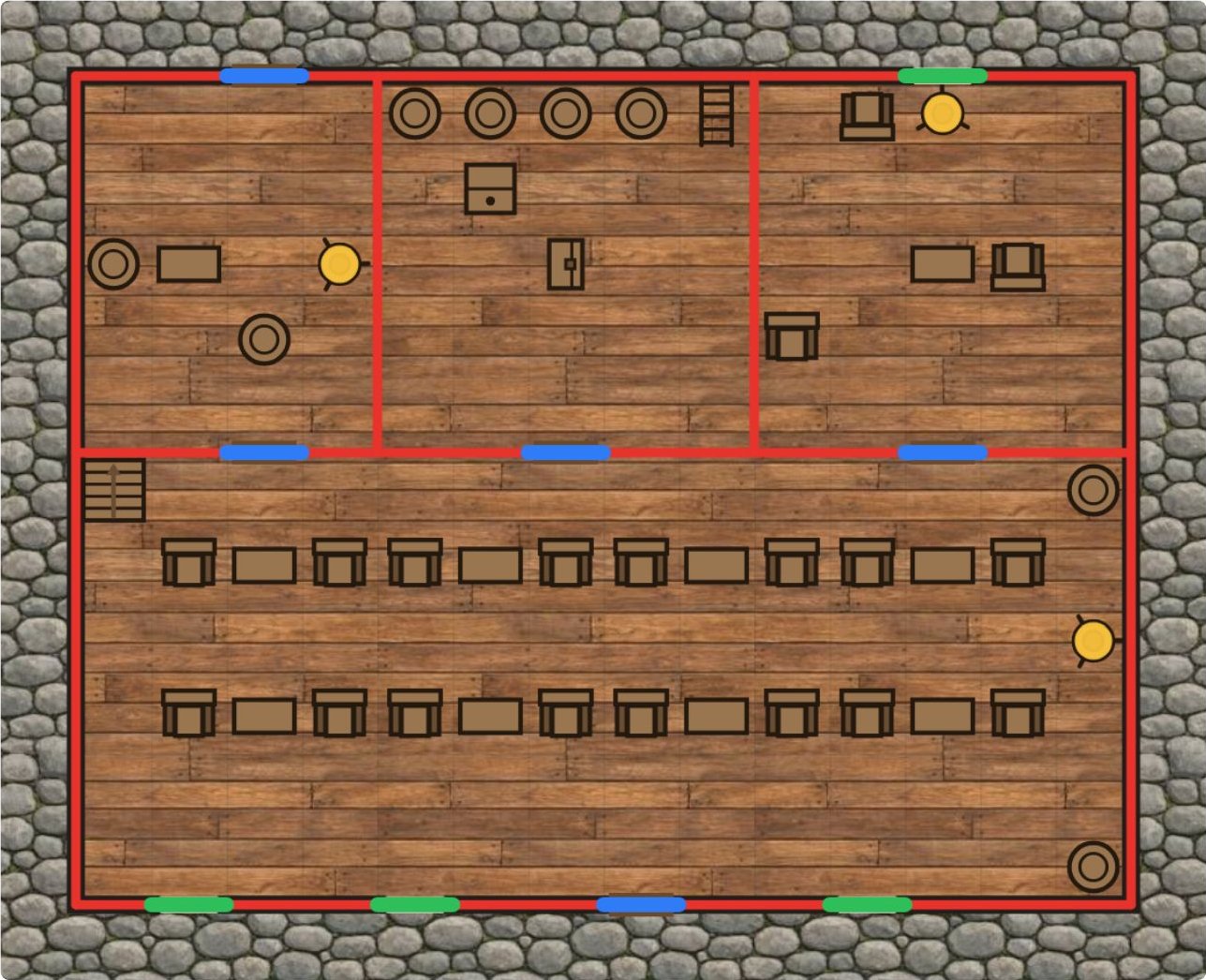
Walls in red, doors in blue, windows in green, lights in yellow. Without a key, the Save for virtual tabletop button shows you this for any map before you buy.
- Foundry VTT: the Universal Battlemap Importer module reads the
.dd2vttas a scene with its walls, doors and lights. Step by step. - Roll20: import the
.dd2vttand the walls, doors and lights come in on the dynamic lighting layer. - Owlbear Rodeo: the Scene Importer extension with Dynamic Fog. Step by step.
Free, any floor saves as a PNG named with its size in squares, so Owlbear Rodeo sets the grid itself. Pro is $6 once, not a subscription, and the same key saves towns, regions, dungeons and ships too.
Not just inns
A tavern has a cellar too. There are also shops with a workroom, a smithy open to the street, a temple with a stair down to the crypt, a guildhall with its strongroom, a bathhouse, a library, the watch’s barracks and cells, a livery stable with a hayloft, a playhouse and a mill. Pick one from the bar above the map, or open any building on a town map and step inside it.
Want to play it alone? Press Explore and only the room you are in shows; open a door to see what’s behind it. More on solo play.
Where it runs
In your browser, free, with nothing to install, and on itch. If you keep your campaign in Obsidian, Mapsmith is a free plugin there (Community plugins, search Mapsmith), and the inn sits in your note with a note for every room. One Pro key works in both.
Mapsmith is free and open source (MIT); Pro adds the VTT save. Made by Bananafest Destiny. The code was written with AI, and the textures under the maps (stone, wood) were made with an image generator; the maps themselves are drawn by code, and the Plain look uses no textures at all. Foundry VTT, Roll20, Owlbear Rodeo and Obsidian are their owners’ trademarks, named only to say what Mapsmith works with.